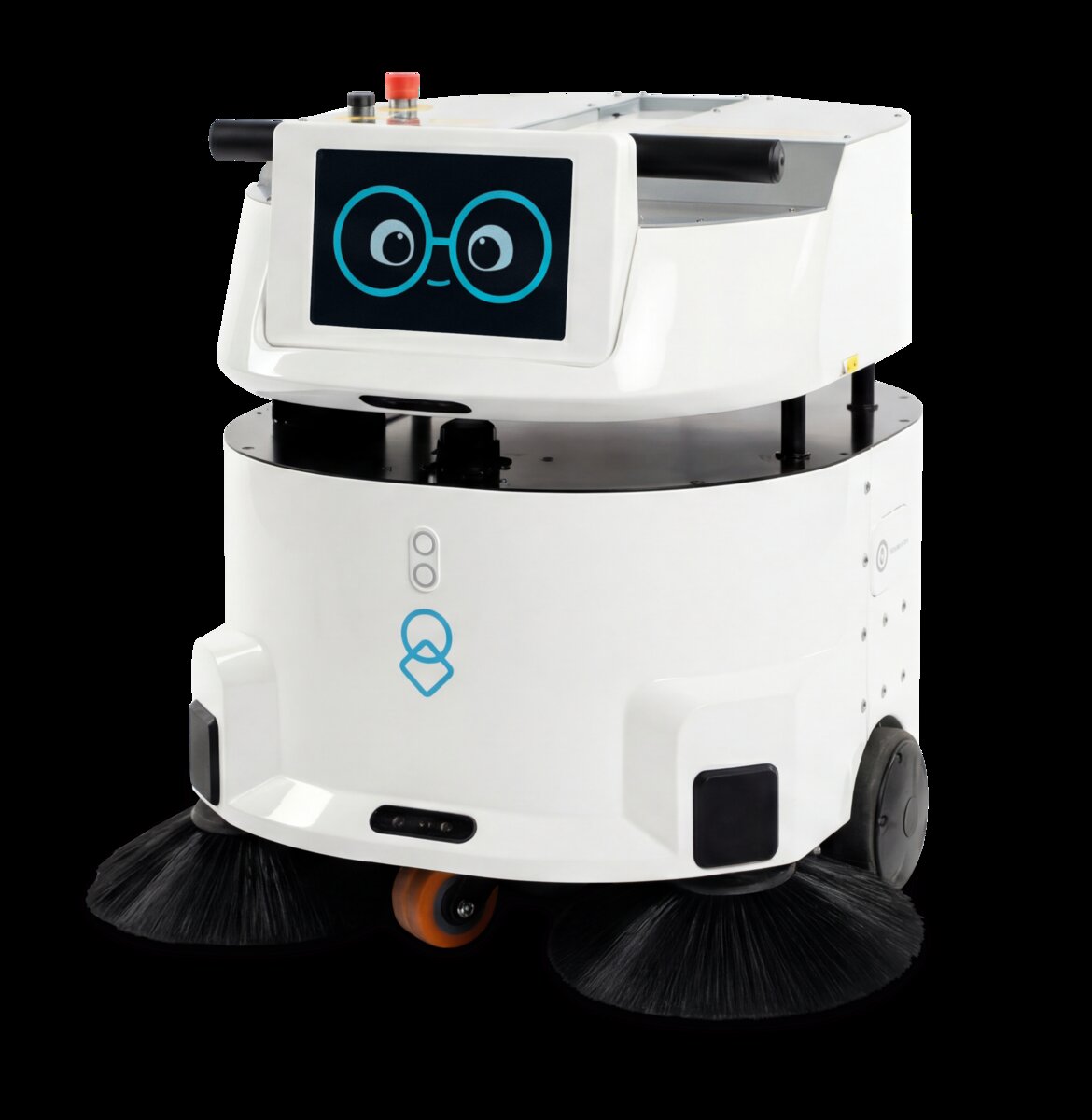
Buyer's Guide
Autonomous Commercial Cleaning Robots: Complete Buyer's Guide
Everything facility managers, operations directors, and procurement teams need to know before investing in autonomous cleaning technology — from ROI justification to deployment planning.
By URG Americas
April 2026
15 min read
1. Why Autonomous Cleaning Is Accelerating in 2026
The commercial cleaning industry is in the middle of a structural shift. Labor shortages, rising wages, and heightened hygiene expectations have moved autonomous cleaning robots from "interesting experiment" to "operational necessity" for a growing number of facilities across healthcare, hospitality, education, and logistics.
Three forces are driving adoption right now. First, the janitorial labor shortage is not cyclical — it is demographic. The average age of commercial cleaning workers continues to rise, turnover rates exceed 200% annually at many firms, and fewer people are entering the field. Second, the technology has matured significantly. Modern autonomous cleaning robots use LiDAR-based navigation, multi-sensor obstacle avoidance, and cloud-based fleet management, delivering consistent cleaning results shift after shift. Third, facility operators are under pressure to do more with less. Budgets are flat, but the square footage that needs cleaning keeps growing.
For operations leaders, the question has shifted from "should we automate cleaning?" to "how do we choose the right platform and deploy it effectively?"
That is exactly what this guide addresses.
2. What Autonomous Cleaning Robots Actually Do
Autonomous commercial cleaning robots are not robotic vacuums scaled up. They are purpose-built machines designed for large floor areas — typically 5,000 to 500,000+ square feet — that perform one or more cleaning functions without a human operator walking behind them.
Core Cleaning Modes
The most capable machines offer multiple cleaning modes in a single platform. These typically include:
- Sweeping — collecting dust, debris, and particulate matter from hard floors
- Scrubbing — applying solution, agitating with brushes, and recovering dirty water
- Vacuuming — deep dust removal from hard surfaces
- Mopping — damp cleaning for polished or sensitive floor surfaces
A machine that combines all four — often called 4-in-1 cleaning — eliminates the need for multiple passes with different equipment and reduces the total number of machines your facility needs to purchase and maintain.
How They Navigate
Modern autonomous cleaning robots use a combination of LiDAR (laser-based distance mapping), cameras, ultrasonic sensors, and sometimes infrared to build and maintain a real-time map of your facility. During an initial mapping session, the robot learns the layout — walls, columns, furniture, doorways. From there, it can execute planned cleaning routes autonomously, adjusting in real time for unexpected obstacles like people, carts, or chairs that have moved.
The best systems do not require physical modifications to your building — no magnetic strips on the floor, no beacons on the walls. They navigate using the building's existing geometry.
Key Distinction: Autonomous vs. Semi-Autonomous
Some machines marketed as "autonomous" still require a human operator to drive them through a route once before they can repeat it. Truly autonomous robots can learn a map, accept cleaning zone assignments, and optimize their own paths — including returning to a charging station when the battery is low and resuming where they left off.
FREE GUIDE — CONTINUE READING
Unlock the rest of this guide
The remaining sections cover the ROI case, evaluation criteria, deployment planning, and the buyer’s checklist. Tell us where to send it and the full guide unlocks instantly.
We respect your inbox — no spam, just the guide and the occasional URG insight.
3. The ROI Case: Numbers That Matter
The business case for autonomous cleaning robots rests on three pillars: labor cost reduction, cleaning consistency, and operational flexibility. Here is how the numbers typically break down.
40–70%
Reduction in labor hours for routine floor cleaning
12–18 mo
Typical payback period for mid-size facilities
8–12 hrs
Daily runtime per charge on leading platforms
Labor Cost Savings
A single autonomous cleaning robot can cover the equivalent work of 2–3 manual cleaning shifts per day. In a facility where you are paying $18–25/hour for cleaning labor (before benefits, training, and turnover costs), a robot running two shifts daily replaces $70,000–$100,000+ in annual labor cost. The robot does not call in sick, does not need to be retrained every quarter, and produces documentable cleaning reports for compliance.
Consistency and Compliance
In regulated environments — hospitals, pharmaceutical labs, food processing — cleaning consistency is not optional. Autonomous robots follow the same path, at the same speed, applying the same solution rate, every single time. Many platforms generate cleaning logs with timestamps, coverage maps, and completion data that satisfy audit requirements without additional administrative work.
Redeploying Staff to Higher-Value Work
Autonomous cleaning does not necessarily mean eliminating cleaning staff. More often, it means redeploying them. The robot handles the large, open floor areas — hallways, lobbies, warehouses — while human staff focus on detailed work that robots cannot do well: restrooms, high-touch surfaces, spot cleaning, and quality inspection. The result is a cleaner facility overall, not just automated floors.
4. Key Features to Evaluate
Not all autonomous cleaning robots are created equal. When evaluating platforms, these are the features that separate machines that perform well in marketing videos from machines that perform well in your building, day after day.
Navigation and Mapping
- LiDAR-based SLAM — Simultaneous Localization and Mapping is the gold standard. Look for multi-point LiDAR rather than single-beam systems.
- Multi-floor support — Can the robot store and switch between maps for different floors or buildings?
- Dynamic obstacle handling — How does the robot react to people, carts, and objects that were not there during mapping? The best systems slow down, reroute, and resume — not stop and wait for help.
- No infrastructure required — Avoid systems that need magnetic tape, QR codes on the floor, or wall-mounted beacons. These add installation cost and ongoing maintenance.
Cleaning Performance
- Cleaning width — Wider cleaning paths mean fewer passes and faster coverage. Look for 700mm+ for mid-size facilities, 900mm+ for large spaces.
- Solution and recovery tanks — Larger tanks mean longer cleaning runs before refilling. Balance tank size against the robot's physical footprint and your doorway widths.
- Brush pressure and speed — Adjustable brush pressure matters for different floor types. Polished concrete needs different treatment than vinyl or epoxy.
- Multi-mode cleaning — 4-in-1 platforms (sweep, scrub, vacuum, mop) provide the most flexibility and reduce your total equipment count.
Fleet Management and Reporting
- Cloud dashboard — Remote monitoring, scheduling, and reporting from any device.
- Cleaning coverage maps — Visual proof that every square foot was cleaned, with timestamps.
- Scheduled cleaning plans — Set daily, weekly, or zone-based schedules without manual intervention.
- Multi-robot coordination — If you will deploy more than one unit, the system should coordinate routes to avoid overlap and ensure complete coverage.
Safety
- Emergency stop button — Physical e-stop that is easy to reach and immediately halts the machine.
- 360-degree obstacle detection — Robots operating around people need comprehensive sensor coverage, not just forward-facing.
- Speed limiting in populated areas — The robot should automatically slow down when it detects people nearby.
- Audible and visual alerts — Warning lights and sounds when the robot is in motion, especially at corners and intersections.
5. Matching Robots to Your Facility Type
The right cleaning robot depends heavily on your facility's characteristics. Here is how different environments map to different machine requirements.
| Facility Type |
Key Requirements |
What to Prioritize |
| Hospitals & Healthcare |
Infection control, 24/7 operation, compliance documentation |
Chemical-compatible tanks, cleaning logs with timestamps, quiet operation for patient areas |
| Hotels & Hospitality |
Guest-facing environments, multiple floor types, overnight cleaning |
Quiet operation, attractive design, scheduled off-hours cleaning, carpet + hard floor capability |
| Warehouses & Logistics |
Large open areas, dust, forklift traffic, 24/7 operations |
Large cleaning width (900mm+), rugged build, long runtime, dust sweeping focus |
| Office Buildings |
Mixed spaces, furniture obstacles, after-hours cleaning |
Compact footprint, good obstacle avoidance, quiet operation, scheduling flexibility |
| Retail & Shopping Centers |
Customer-facing, varying traffic, polished floors |
Elegant design, adjustable brush pressure for polished surfaces, daytime-safe operation |
| Education (K-12 & Universities) |
Large corridors, cafeterias, gyms, budget constraints |
Versatile cleaning modes, easy operation, strong ROI for budget-conscious institutions |
Facility Size Matters
Autonomous cleaning robots deliver the strongest ROI in facilities over 20,000 square feet of cleanable floor space. Below that threshold, the labor savings may not justify the investment. Above 50,000 sq ft, the payback period shortens dramatically and multi-robot fleets become an option.
6. Comparing Your Options: What to Look For
When evaluating different autonomous cleaning robot platforms, structure your comparison around these dimensions. Price alone will mislead you — total cost of ownership over 3–5 years is what matters.
| Evaluation Criteria |
Questions to Ask |
| Cleaning Capability |
How many cleaning modes? Can it handle your floor type? What is the effective cleaning width? |
| Navigation Technology |
LiDAR, camera, or hybrid? Does it require infrastructure (tape, beacons)? How does it handle dynamic obstacles? |
| Runtime & Charging |
Hours per charge? Auto-return to dock? Resume-where-it-left-off capability? |
| Fleet Management |
Is there a cloud dashboard? Can you schedule remotely? Are cleaning reports generated automatically? |
| U.S. Support |
Where is the nearest service team? What is the warranty? What is the response time for technical issues? |
| Total Cost of Ownership |
Purchase price + maintenance + consumables (brushes, squeegees, filters) + software fees over 3–5 years. |
| Proven Track Record |
How many units deployed? In what types of facilities? Can the vendor provide references in your industry? |
Why U.S.-Based Support Matters
Many autonomous cleaning robots are manufactured overseas, which is fine — global engineering talent produces excellent machines. But support, service, and parts availability must be local. When a robot goes down in your hospital at 2 AM, you need a U.S.-based team that can troubleshoot remotely, dispatch parts overnight, or schedule an on-site visit within days, not weeks. Ask every vendor where their support team is located and what their SLA commitments look like.
7. Deployment Planning: From Purchase to Production
Buying the robot is the easy part. Deploying it successfully takes planning. Here is a proven approach to getting from purchase order to productive operation.
Phase 1: Site Assessment (Week 1–2)
Before the robot arrives, conduct a site walkthrough to identify cleaning zones, floor types, high-traffic areas, doorway widths, ramp gradients, and charging station placement. Map out where the robot will operate, where it should avoid (e.g., patient rooms, server closets), and where it will dock.
Phase 2: Mapping and Route Setup (Week 2–3)
Once the robot is on site, the initial mapping session creates the digital floor plan the robot uses to navigate. This typically takes a few hours per floor. After mapping, you define cleaning zones and create scheduled routes — daily hallway cleaning, twice-weekly lobby scrub, weekly warehouse sweep, and so on.
Phase 3: Staff Training and Parallel Operation (Week 3–4)
Run the robot alongside your existing cleaning staff for 1–2 weeks. This builds confidence, identifies any mapping adjustments needed, and lets your team learn how to start, stop, monitor, and troubleshoot the robot. Most platforms require minimal training — 1–2 hours for daily operators.
Phase 4: Independent Operation (Week 4+)
Transition to autonomous operation with human oversight. Your staff checks cleaning reports, handles edge cases, and performs the detailed cleaning the robot does not cover. Review coverage reports weekly for the first month, then monthly as operations stabilize.
Plan for Consumables
Brushes, squeegees, filters, and cleaning solution are ongoing costs. Budget for consumable replacement every 3–6 months depending on usage intensity. A good vendor will include a consumables schedule in their deployment documentation so there are no surprises.
8. Common Mistakes Buyers Make
After supporting autonomous cleaning deployments across dozens of facilities, these are the mistakes we see most often.
- Buying on price alone. The cheapest robot often has the highest total cost of ownership. Thin margins mean thin support. Ask about the full 3-year cost including maintenance, consumables, and software.
- Skipping the site assessment. Every facility has surprises — a ramp that is too steep, a doorway that is too narrow, a floor transition that catches the squeegee. A proper site assessment catches these before the robot arrives.
- Expecting 100% automation overnight. Autonomous cleaning works best as a partnership between robots and people. Set realistic expectations: the robot handles 60–80% of routine floor cleaning, freeing your team for everything else.
- Ignoring staff buy-in. If your cleaning team feels threatened, they will not help the robot succeed. Position the technology as a tool that makes their job easier and shifts them to higher-value tasks, not a replacement.
- Not evaluating support responsiveness. Ask for the vendor's average response time. Call their support line before you buy and see how long it takes to reach a human. This tells you more than any sales presentation.
9. Your Pre-Purchase Checklist
Use this checklist when evaluating autonomous cleaning robot vendors. Any vendor that cannot address all of these points should be asked to explain why.
- Cleaning capability matches your floor types and facility layout
- LiDAR-based navigation with no infrastructure modifications required
- Runtime meets or exceeds your largest cleaning zone's requirements
- Cloud-based fleet management with remote scheduling and reporting
- Proven deployments in your industry with referenceable customers
- U.S.-based technical support with defined SLA commitments
- Total cost of ownership calculated for 3–5 years (not just purchase price)
- Consumables schedule and pricing provided upfront
- Site assessment offered before purchase commitment
- Staff training included in the deployment package
- Warranty terms clearly defined (parts, labor, software updates)
- Safety certifications appropriate for your environment
Ready to Explore Autonomous Cleaning for Your Facility?
URG Americas offers the uClean line of autonomous cleaning robots — German-engineered, 4-in-1 platforms with dedicated U.S. support. From compact models for offices and clinics to large-capacity machines for warehouses and hospitals.
Explore uClean
Get in Touch
10. Next Steps
If you are seriously evaluating autonomous cleaning robots, here is how to move forward efficiently:
- Measure your cleanable floor space. Know your total square footage, broken down by floor type and area.
- Calculate your current cleaning cost. Total annual spend on labor, equipment, and consumables for floor cleaning specifically.
- Shortlist 2–3 vendors. Use the evaluation criteria and checklist above to structure your comparison.
- Request a site assessment. Any serious vendor will visit your facility (or conduct a virtual assessment) before quoting.
- Run a pilot. If possible, deploy one unit in a defined area for 30–60 days to validate performance before scaling.
Autonomous cleaning technology is proven, the ROI is real, and the facilities that adopt it now will have a meaningful operational advantage over those that wait. The key is choosing the right platform, the right partner, and deploying thoughtfully.
If you have questions or want to discuss whether autonomous cleaning is a fit for your facility, reach out to our team. We are happy to walk through your specific situation — no commitment required.