The Hidden Cost of Manual Hospital Deliveries
Every day inside a typical 300-bed hospital, thousands of internal deliveries happen: medications from the pharmacy, lab specimens to pathology, linens to patient floors, meals from the kitchen, sterile instruments to the OR. The vast majority of these deliveries are still done by people — nurses, aides, porters, and volunteers — walking items from point A to point B through crowded corridors.
The cost of this is enormous, and most of it is invisible. It does not show up as a line item on a budget report. It shows up as a nurse who cannot respond to a patient call because she is delivering a supply cart to the third floor. It shows up as a lab result delayed by 45 minutes because no one was available to walk the specimen down. It shows up as staff burnout, overtime, and turnover.
Autonomous delivery robots address this directly. They take over the repetitive, predictable transport tasks — the runs that happen on a schedule or on demand — and free clinical staff to focus on patient care.
How Hospital Delivery Robots Work
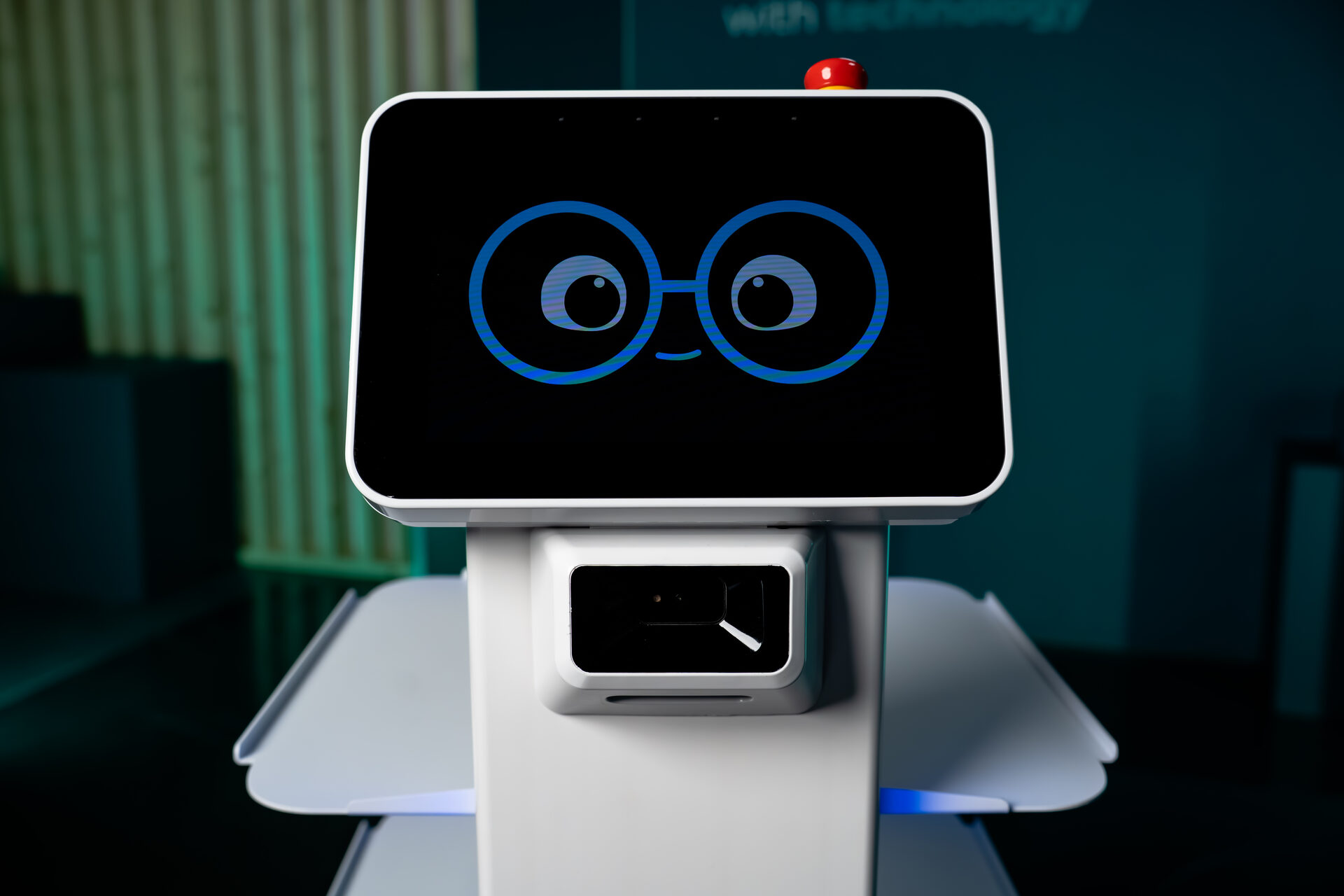
Modern hospital delivery robots are self-navigating mobile platforms that carry supplies through hallways, into elevators, and between departments without human guidance. They use the same core technologies as other autonomous mobile robots — LiDAR mapping, multi-sensor obstacle avoidance, and cloud-based fleet management — but are purpose-built for healthcare environments.
Key Capabilities
- Autonomous navigation — robots map the hospital's layout and navigate independently, including calling and riding elevators via integration with building systems
- Enclosed compartments — secure, lockable compartments protect sensitive items like medications, specimens, and sterile supplies during transport
- Multi-stop routing — a single robot can handle sequential deliveries, picking up from the pharmacy, dropping at two nursing stations, and returning to base
- Fleet coordination — when multiple robots operate in the same facility, a central system assigns tasks, optimizes routes, and prevents traffic conflicts
- 24/7 operation — robots run overnight shifts, early mornings, and weekends without staffing challenges
What They Carry
Hospital delivery robots typically handle the following categories of internal transport:
| Delivery Type | Frequency | Why It Matters |
|---|---|---|
| Pharmacy & Medications | Continuous throughout the day | Faster delivery to patient floors reduces medication delays |
| Lab Specimens | High-frequency, time-sensitive | Faster lab turnaround times improve diagnosis and treatment |
| Linens & Supplies | Scheduled daily routes | Frees nursing aides from routine cart runs |
| Meals & Nutrition | 3x daily plus on-demand | Consistent meal delivery timing improves patient satisfaction |
| Sterile Instruments | On-demand to OR suites | Reduces surgical delays from missing instruments |
| Waste & Recycling | Scheduled pickup routes | Keeps clinical areas clear without dedicated porter time |
The Impact Beyond Efficiency
The obvious benefit is operational — fewer staff hours spent on transport means more hours available for patient care. But the ripple effects go deeper.
Staff Satisfaction and Retention
Nurses and clinical staff consistently rank "too much time on non-clinical tasks" as a top contributor to burnout. When a robot handles the routine deliveries, nurses stay on the floor with their patients. This is not a marginal improvement — it fundamentally changes how clinical staff experience their shift. Hospitals that have deployed delivery robots report measurable improvements in staff satisfaction scores and reduced turnover in nursing roles.
Infection Control
Every human touchpoint in a supply chain is a potential vector for contamination. Autonomous robots reduce the number of people handling supplies, entering and exiting clean areas, and moving between departments. Their surfaces can be easily sanitized between runs, and their routes can be designed to minimize cross-contamination risk. In environments where infection prevention is a priority — ICUs, oncology wards, surgical suites — this is a meaningful benefit.
Consistency and Traceability
Robots deliver on schedule, every time. They do not get pulled away for other tasks, do not take breaks, and do not deviate from assigned routes. Every delivery is logged with timestamps, origin, destination, and delivery confirmation. For hospitals with regulatory requirements around chain of custody — pharmaceuticals, specimens, controlled substances — this traceability is valuable documentation that happens automatically.
Night Shift Advantage
The overnight shift is where autonomous delivery robots have perhaps the greatest impact. Staffing is thinnest, transport requests still come in, and a single delivery run can pull a nurse away from monitoring patients for 15–20 minutes. Robots fill this gap seamlessly, operating through the night without fatigue.
Choosing the Right Platform for Your Hospital
When evaluating delivery robots for a healthcare environment, these factors should guide your decision:
- Payload capacity and compartment size — Can it handle your largest common delivery (e.g., a full pharmacy cart or linen bin)? Multiple compartment sizes let you match the robot to the task.
- Elevator integration — Multi-floor hospitals need robots that can call elevators and ride them autonomously. This requires integration with your building management system.
- Infection control compatibility — Surfaces should be easy to wipe down. Compartments should be fully enclosed and sealable. The robot should handle safely in sterile corridors.
- Quiet operation — Hospital environments demand low noise levels, especially in patient care areas. Ask for decibel specifications and test in your environment.
- Integration with hospital systems — The best platforms integrate with your nurse call system, pharmacy management system, or materials management to automate task dispatch.
Getting Started: A Practical Approach
Most hospitals that successfully deploy delivery robots start with a focused pilot rather than a facility-wide rollout. Here is a proven approach:
- Identify your highest-impact route. Which delivery runs consume the most staff time or cause the most delays? Pharmacy-to-floor and specimen-to-lab are common starting points.
- Quantify the baseline. Track how many deliveries happen on this route daily, who performs them, and how long each trip takes. This gives you the ROI benchmark.
- Run a 60-day pilot. Deploy one or two robots on the chosen route and measure actual performance against your baseline.
- Scale based on data. Once you have validated results, expand to additional routes and floors with confidence in the projected return.
Explore Autonomous Delivery for Your Hospital
The URG Americas uLog platform is purpose-built for internal logistics — with models ranging from compact units for tight corridors to large-capacity platforms for supply runs.
Explore uLog Talk to Our Team