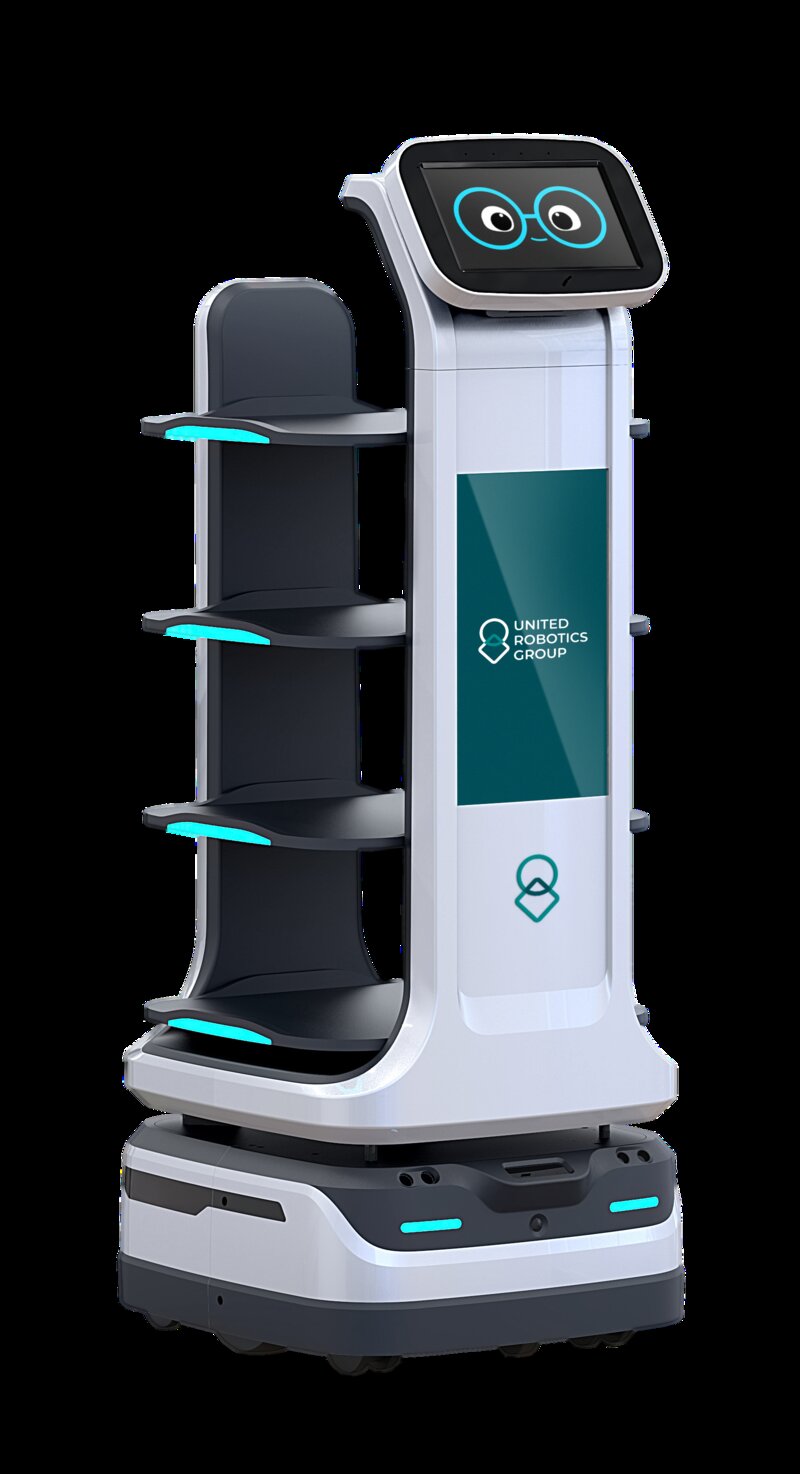
The Case for Food Service Robots
Food service and dining operations face persistent labor challenges: high turnover, difficulty finding service staff, and increasing costs. A typical hospital cafeteria might employ 8-10 food service workers to manage daily dining, tray delivery, and cleanup. Universities operate multiple campus dining locations competing for student staff. Corporate dining faces similar pressures. Autonomous robots offer a compelling solution, augmenting human staff rather than replacing them entirely.
The opportunity is significant: Food service is labor-intensive, repetitive, and highly scalable. A robot that can deliver trays during peak lunch hours, clear tables continuously, and handle standardized routes addresses real bottlenecks. The result is faster service, improved guest experience, and more efficient staffing allocation.
This guide explores practical deployment strategies for food service robots in different settings and answers the questions facilities managers ask about viability, safety, and return on investment.
Use Cases: Hospital, University, Corporate
Hospital Cafeterias & Patient Meal Delivery
Hospitals benefit from robots in two areas: employee cafeteria service and patient meal delivery. Employee cafeterias operate during limited lunch hours (11 AM-2 PM) with high traffic. Robots can clear tables, freeing staff for checkout and food prep. Patient meal delivery requires robots to navigate hallways, enter patient rooms, and deliver meals reliably. Robots must coordinate with nursing staff and respect strict hygiene protocols.
Key metrics: Hospital deployments typically report 25-35% reduction in food service labor costs and 40%+ improvement in delivery speed for patient meals.
University Dining & Cafeterias
Universities operate dozens of dining locations across campuses. Robots assist with high-volume tray service during peak dining hours and help manage the challenge of limited student staff availability. Robots can operate extended hours (7 AM-9 PM) where human staff are unavailable, clearing tables in real-time rather than letting dishes accumulate.
Key benefit: Improved dining environment (clean tables, efficient service) without proportional increase in staffing costs.
Corporate Dining & Catered Events
Corporate dining centers and high-volume cafeterias use robots for peak-hour tray clearing, food delivery during events, and continuous table service. A corporate campus serving 2,000+ employees daily benefits from automated clearing that keeps dining areas clean and inviting.
Additional benefit: Robots handle both high-volume daily service and special catered events with flexibility.
Key Insight: Augmentation, Not Replacement
Successful food service robot deployments augment staff, not replace them. Staff redirected from table-clearing focus on food quality, guest service, and specialized tasks. Guest satisfaction improves because service staff can engage directly with diners rather than constantly clearing tables.
Robot Types & Capabilities
| Robot Type | Primary Function | Payload / Capacity | Ideal Environment |
|---|---|---|---|
| uServe | Tray clearing, food delivery, guest interaction | 12-20 place settings per load | Cafeterias, high-traffic dining areas |
| uLog Deliver 80 | Small meal delivery, cart-based service | Up to 80 lbs / modest tray volumes | Hospitals, office dining, room service |
| uLog Deliver 150 | Medium meal delivery, bulk tray transport | Up to 150 lbs / high-volume delivery | Large hospitals, university dining |
| Custom cart integration | Oversized tray/cart transport | Customizable to facility needs | High-volume cafeterias, food courts |
Task-Specific Capabilities
Tray clearing: uServe robots scan dining areas, identify tables with empty/finished trays, and collect dishes automatically. Multiple robots working in parallel can clear a 100-seat cafeteria in 15-20 minutes during peak service.
Delivery: uLog robots deliver trays from kitchen to dining areas or patient rooms. Programming includes route optimization to avoid congestion and coordination with staff at delivery points (e.g., nursing stations for patient meals).
Guest interaction: uServe robots equipped with screens or announcement systems can communicate with guests ("Your order is on the table," "Thank you!"), improving perceived service quality.
Food Safety & Hygiene Considerations
Food safety is paramount in dining operations. Robots must operate within strict health code requirements. Key considerations:
Hygiene Standards
Most commercial food service robots are designed with these standards in mind. Stainless steel surfaces, sealed electronics, and removable trays enable easy cleaning. However, verify these specifications before purchase.
Regulatory Compliance
Food service robots must comply with FDA, state health department, and local food safety codes. Check with your local health authority before deployment. Some jurisdictions have not yet developed specific robot regulations, so demonstrate equivalence to manual service (e.g., robots maintain the same temperature control, prevent contamination, and support traceability).
Guest Interaction & Experience Design
Deploying visible robots in guest-facing areas requires careful design. Guests may be uncertain how to interact with a robot or uncomfortable having one approach them. Strategic planning ensures positive experiences.
Communication & Transparency
- Signage: Clear labels explaining robot purpose ("I'm clearing tables") and guest instructions ("Just wave when I pass")
- Visual signals: Robots emit distinctive sounds or lights indicating operation, helping guests avoid surprise encounters
- Staff explanation: Brief mention during onboarding or on menus: "Robots assist our team with tray service, enabling faster, cleaner dining areas"
Behavioral Design
- Respectful navigation: Robots maintain safe distance from guests; avoid aggressive or unpredictable movements
- Optional interaction: Guests can opt-in to robot interaction (e.g., robots ask before clearing a table: "May I clear your tray?") but can also ignore robots
- Staff availability: Human staff remain visible and available for special requests; robots handle routine tasks only
Measurement & Iteration
Collect guest feedback after robot deployment. Use brief surveys ("How do you feel about our table-clearing robots?") or observe guest reactions. Most facilities report positive sentiment after initial adjustment. University and hospital guests adapt quickly when they understand robots improve service quality.
Peak Hour Management & Scheduling
Food service robots must handle dramatic volume swings. Lunch operates 11 AM-2 PM with concentrated demand; off-peak hours have minimal activity. Effective scheduling maximizes robot utilization.
Peak Hour Strategy (Lunch Demand)
Time period: 11 AM-2 PM; 80%+ of daily dining volume in 3-hour window
Robot deployment: 2-4 robots work continuously on tray clearing, reducing table residence time. Staff handles food service and checkout.
Charging: Robots return to dock 30 min before peak begins; achieve full charge by 11 AM. At end of peak (2 PM), robots dock for extended recharge.
Off-Peak Hours (Breakfast, Dinner, Late Night)
Lower traffic (20-30% of peak volume) allows single robot to handle clearing. Robots operate 7-9 AM (breakfast) and 5-7 PM (dinner) on extended schedules. Robots charging during minimal-traffic periods (3-4 PM, 8-11 PM).
Multi-Location Coordination
Universities with multiple dining halls schedule robots to concentrate on peak-demand locations. A centralized dashboard shows all robot status across locations, enabling dynamic redeployment as demand shifts.
ROI & Labor Savings Analysis
Most food service robot deployments achieve ROI within 3-4 years through labor savings. Here's a typical analysis:
Cost Structure (Annual)
| Category | Typical Cost (1 Robot) | Notes |
|---|---|---|
| Purchase Price | $60K-100K | One-time capital expense |
| Installation & Training | $5K-10K | One-time; includes staff training |
| Maintenance (Annual) | $3K-6K | Consumables, repairs, service |
| Insurance (Annual) | $1K-3K | Robot liability coverage |
| Software/Cloud (Annual) | $500-1.5K | Fleet management dashboard |
Labor Savings (Annual)
One robot reduces food service labor by approximately 0.75-1.5 FTE (full-time equivalent). At $35K/year fully-loaded cost per FTE:
- Robot clearing 1.0 FTE: $35K annual savings
- Robot clearing 1.5 FTE: $52.5K annual savings
ROI Timeline
Year 1: $60K capital investment + $9.5K operating costs - $35K savings = -$34.5K net. (First-year negative due to large upfront cost)
Year 2: $9.5K operating costs - $35K savings = +$25.5K net (robot pays for itself)
Year 3-5: $25.5K+ annual benefit (ROI achieved; robot continues producing value)
Breakeven point: 2.5-3 years in most cafeteria deployments. High-volume food service (2,000+ daily diners) achieves ROI faster (2 years); low-volume (200-400 daily diners) achieves ROI slower (3.5-4 years).
Ready to Enhance Your Dining Service?
URG Americas' uServe and uLog robots are designed specifically for food service environments. We provide complete deployment support, staff training, health code compliance guidance, and ongoing optimization to ensure your robot investment delivers maximum impact.
Start Your Food Service Robot DeploymentCommon Deployment Challenges & Solutions
Challenge: Narrow Hallways & Tight Spaces
Solution: Select robots with compact dimensions (uServe designed for tight spaces). Plan routes avoiding peak-occupancy times. Use scheduled operation (e.g., clear tables 2-3 PM after peak dining ends).
Challenge: Unpredictable Obstacles (Chairs, Guests)
Solution: Use geofencing to restrict robot operation to clear zones. Deploy during specific operating windows (post-peak clearing). Train staff to help manage obstacles.
Challenge: Hygiene & Contamination Concerns
Solution: Emphasize robots never touch food. Include sanitization in daily routines. Get health department approval explicitly; share documentation with inspectors.
Conclusion
Food service robots offer significant value in hospitals, universities, and corporate dining environments. They augment staff, improve guest experience, and deliver ROI within 3-4 years. Success requires careful planning around hygiene, guest experience, and operational scheduling. When deployed thoughtfully, robots transform dining from a labor-intensive pain point into a competitive advantage.