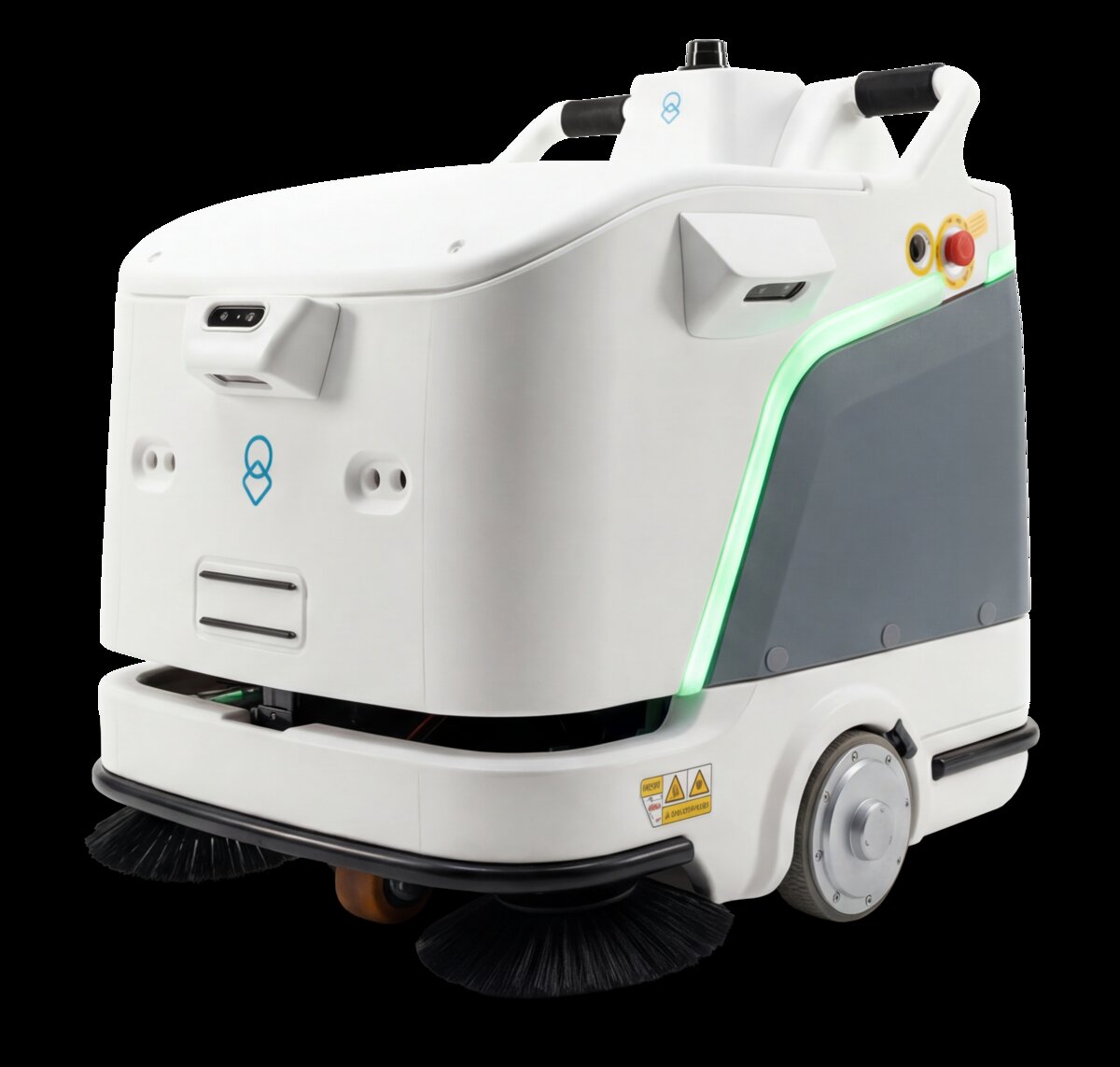
The Math Behind Autonomous Cleaning
The value proposition for autonomous cleaning robots is fundamentally a labor equation. You are comparing the fully loaded cost of human cleaning labor against the total cost of owning and operating a robot that performs the same work. The math is straightforward — but only if you account for all the costs on both sides.
Most vendors will show you a simple comparison: robot price vs. one employee's salary. That is not the full picture. On the human side, you need to include benefits, training, turnover costs, and management overhead. On the robot side, you need to include maintenance, consumables, software fees, and eventual replacement. Here is how to build an honest comparison.
Step 1: Calculate Your True Cleaning Labor Cost
The hourly rate you pay a cleaning worker is only the starting point. The fully loaded cost of a cleaning employee typically includes:
| Cost Component | Typical Range | Notes |
|---|---|---|
| Base Hourly Wage | $15 – $25/hr | Varies by market; $18–22 is typical for commercial cleaning in 2026 |
| Benefits & Payroll Tax | 25 – 35% of wages | Health insurance, workers' comp, FICA, unemployment |
| Training Costs | $500 – $2,000/yr | Initial training, safety training, equipment training |
| Turnover Cost | $3,000 – $5,000 per hire | Recruiting, onboarding, productivity ramp; 200%+ annual turnover is common |
| Management Overhead | 10 – 15% of wages | Supervision, scheduling, quality control, HR administration |
| Equipment & Supplies | $2,000 – $5,000/yr | Walk-behind scrubbers, chemicals, mops, PPE |
For a full-time cleaning worker earning $20/hour and working 2,080 hours per year, the fully loaded annual cost typically lands between $55,000 and $75,000 when you include all of the above. This is the number you should use for comparison — not the base wage.
Step 2: Estimate the Robot's Coverage
An autonomous cleaning robot does not replace a human worker one-for-one across all tasks. It replaces the floor cleaning component — the sweeping, scrubbing, vacuuming, and mopping of large open areas. This typically represents 40–70% of a cleaning worker's daily workload, depending on the facility.
To estimate what a robot covers in your facility, answer these questions:
- How many total square feet of hard floor do you clean daily?
- How many labor hours per day are spent on floor cleaning specifically (not restrooms, trash, high-touch surfaces)?
- What is the robot's cleaning rate? (Typical: 3,000–6,000 sq ft per hour depending on the model and cleaning mode)
Rule of Thumb
A single autonomous cleaning robot running one 8-hour shift can typically cover 25,000–50,000 square feet of floor space, depending on the cleaning mode and layout complexity. Running two shifts doubles that to 50,000–100,000 sq ft per day.
Step 3: Three Real-World Scenarios
Here are three scenarios using representative numbers. Find the one closest to your facility and adjust accordingly.
Scenario A: Mid-Size Office Building (40,000 sq ft)
Scenario B: Hospital (150,000 sq ft of cleanable floor)
Scenario C: Large Warehouse / Distribution Center (300,000 sq ft)
Step 4: Factor In the Hidden Benefits
The scenarios above capture direct labor savings, which is the most quantifiable benefit. But several other factors improve the real-world ROI:
- Elimination of turnover costs. At 200% annual turnover, a cleaning team of 4 people means 8 hires per year. At $3,000–$5,000 per hire, that is $24,000–$40,000 annually in recruiting and onboarding costs that disappears when a robot handles the bulk of floor cleaning.
- Consistent cleaning quality. Autonomous robots follow the same path at the same speed every time. This consistency can reduce slip-and-fall incidents (and associated liability costs), improve inspection scores, and satisfy regulatory requirements without additional supervision.
- Extended cleaning hours. A robot can run overnight or during off-peak hours without shift premiums. Facilities that need 16+ hours of daily cleaning coverage see the strongest payback because the robot eliminates the need for a second or third shift.
- Data and documentation. Cleaning logs, coverage maps, and completion reports are generated automatically. In regulated industries, this documentation alone can save significant administrative time and reduce audit preparation costs.
When a Cleaning Robot Is NOT the Right Investment
Not every facility benefits from autonomous cleaning. Be honest with yourself about these scenarios:
- Very small facilities (under 10,000 sq ft) — The labor savings typically do not justify the investment at this scale.
- Highly cluttered environments — If your floor space is constantly occupied by equipment, pallets, or furniture with no clear pathways, a robot will spend more time avoiding obstacles than cleaning.
- Primarily carpeted facilities — Most autonomous cleaning robots excel on hard floors. Carpet cleaning automation exists but is less mature.
- Facilities with extreme floor conditions — Heavy oil, chemical spills, or extremely uneven surfaces may exceed what current autonomous platforms can handle effectively.
The Break-Even Rule
If your facility has more than 20,000 square feet of hard floor cleaned at least once daily, and your fully loaded cleaning labor cost exceeds $50,000 per year, an autonomous cleaning robot will almost certainly pay for itself within 18 months. The larger the space and the higher your labor costs, the faster the payback.
Next Steps: Build Your Own ROI Case
Take 30 minutes to gather three numbers from your facility: total cleanable hard-floor square footage, number of labor hours spent on floor cleaning per week, and your fully loaded cost per cleaning hour. With those three inputs, you can estimate your payback period using the framework above.
If you want help running the numbers for your specific facility, our team can walk through it with you. We are not going to oversell — if the ROI does not work for your situation, we will tell you that. Reach out for a no-obligation consultation.
Ready to Run the Numbers for Your Facility?
Our team can help you build a detailed ROI analysis specific to your facility size, floor types, and current cleaning operation.
Explore uClean Get a Custom ROI Analysis