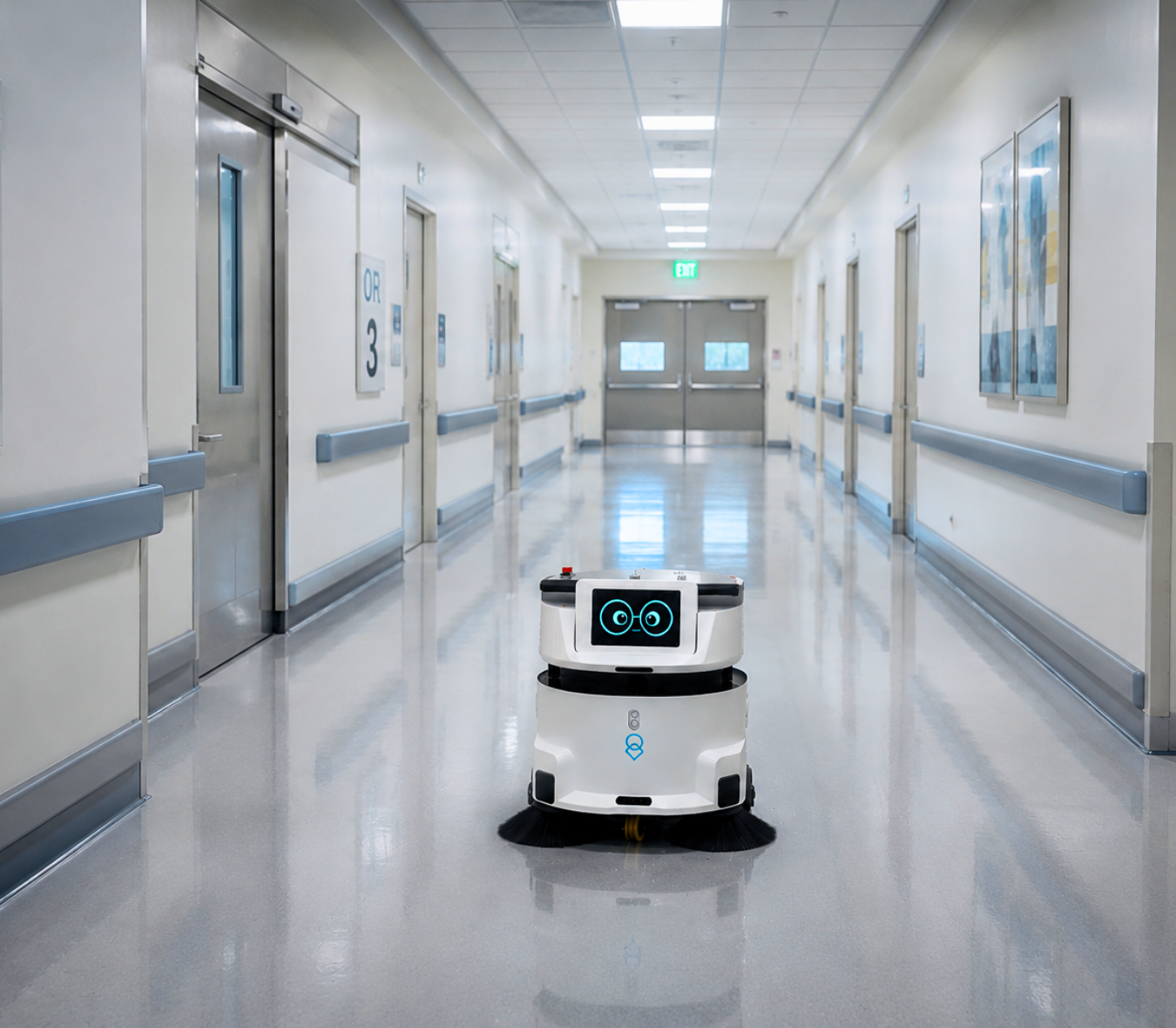
Why Healthcare Cleaning Is Different
Cleaning a hospital or clinic is not the same as cleaning an office. The stakes are higher, the standards are stricter, and the environment runs around the clock. At the same time, cleaning teams face the same labor shortage and turnover pressures as the rest of the facilities industry, which makes consistent coverage hard to guarantee.
Autonomous floor care addresses the part of the job that is repetitive and hard to staff reliably, the routine vacuuming and scrubbing of corridors and large open areas, so the human team can focus on the detailed, high-touch disinfection that requires judgment.
Coverage and Consistency in High-Traffic Areas
Long corridors, lobbies, and waiting areas need frequent, consistent cleaning, and they are exactly the kind of large repetitive spaces where an autonomous robot performs well. The robot follows the same path at the same standard every run, which removes the variability that comes with a short-staffed shift.
Consistency is the real benefit. A machine that covers the same square footage the same way every night gives facility managers a reliable baseline, and frees the crew to spend their time where a person genuinely adds value.
Infection Control and Documentation
In healthcare, being able to show what was cleaned and when is as important as the cleaning itself. Autonomous units can record where they ran and when, producing a log that supports infection-control reporting and audits rather than relying on manual sign-off sheets.
This documentation turns routine floor care into measurable, verifiable work. When a facility needs to demonstrate coverage for a compliance review, a consistent digital record is far stronger than a checklist filled in at the end of a shift.
Working Around a 24/7 Clinical Schedule
Hospitals never close, so cleaning has to fit around patients, staff, and equipment. Autonomous units can run during off-peak hours and in defined zones, working the routine areas overnight or between peaks without getting in the way of care.
Safe navigation matters here. The robot needs to move predictably around people and equipment and yield appropriately in a busy clinical environment, which is why deployment planning and clear zones are part of a successful rollout.
What to Evaluate Before Deploying
Before deploying, evaluate the floor types and surfaces, the layout and obstacles, the connectivity available, and how the unit will charge and be stored. A short site walk usually surfaces the practical questions that determine how well automation will fit.
Also consider how the robot fits your team's workflow. The goal is to hand the repetitive square footage to the machine while keeping people on the detail work, so the handoff between robot and crew should be clear from day one.
Measuring Results
The results that matter are coverage, consistency, and the labor hours returned to the team. Define a simple baseline before you start, then compare the documented coverage and the hours freed once the unit is running.
The uClean line handles vacuuming, scrubbing, sweeping, and mopping autonomously. On our Robots-as-a-Service model a facility can put one unit to work on a single wing or building at a fixed monthly cost and measure the results before scaling.