The Senior Living Staffing Crisis
The senior living industry faces an unprecedented labor shortage. With the U.S. population of adults aged 65+ expected to reach 80 million by 2040, demand for long-term care continues to accelerate while the qualified workforce shrinks. The vacancy rate for nursing positions in senior care facilities has exceeded 15%, and turnover rates routinely hit 30-40% annually.
This staffing gap creates a cascade of problems: reduced resident care quality, caregiver burnout, safety risks, and operational inefficiencies. Many facilities operate with skeleton crews, stretching existing staff too thin. The financial pressure is acute—facilities lose revenue from unoccupied beds, face penalties for understaffing, and must spend heavily on temporary staffing that costs 40-60% more than permanent positions.
Autonomous robots don't replace care workers—they augment them. By handling repetitive, non-clinical logistics tasks, robots free nursing staff to focus on direct resident care, improving both outcomes and job satisfaction.
Core Applications: Delivery, Engagement & Cleaning
Autonomous robots deliver the most immediate value in three distinct areas within senior living communities. Each addresses a different operational pain point while improving the resident experience.
Logistics & Delivery
Autonomous delivery robots handle the constant flow of items that moves through a senior living facility: medications, meals, documents, laundry, supplies, and personal items. A typical large facility might generate hundreds of delivery requests daily. Manual delivery consumes enormous amounts of staff time, often pulling caregivers away from residents.
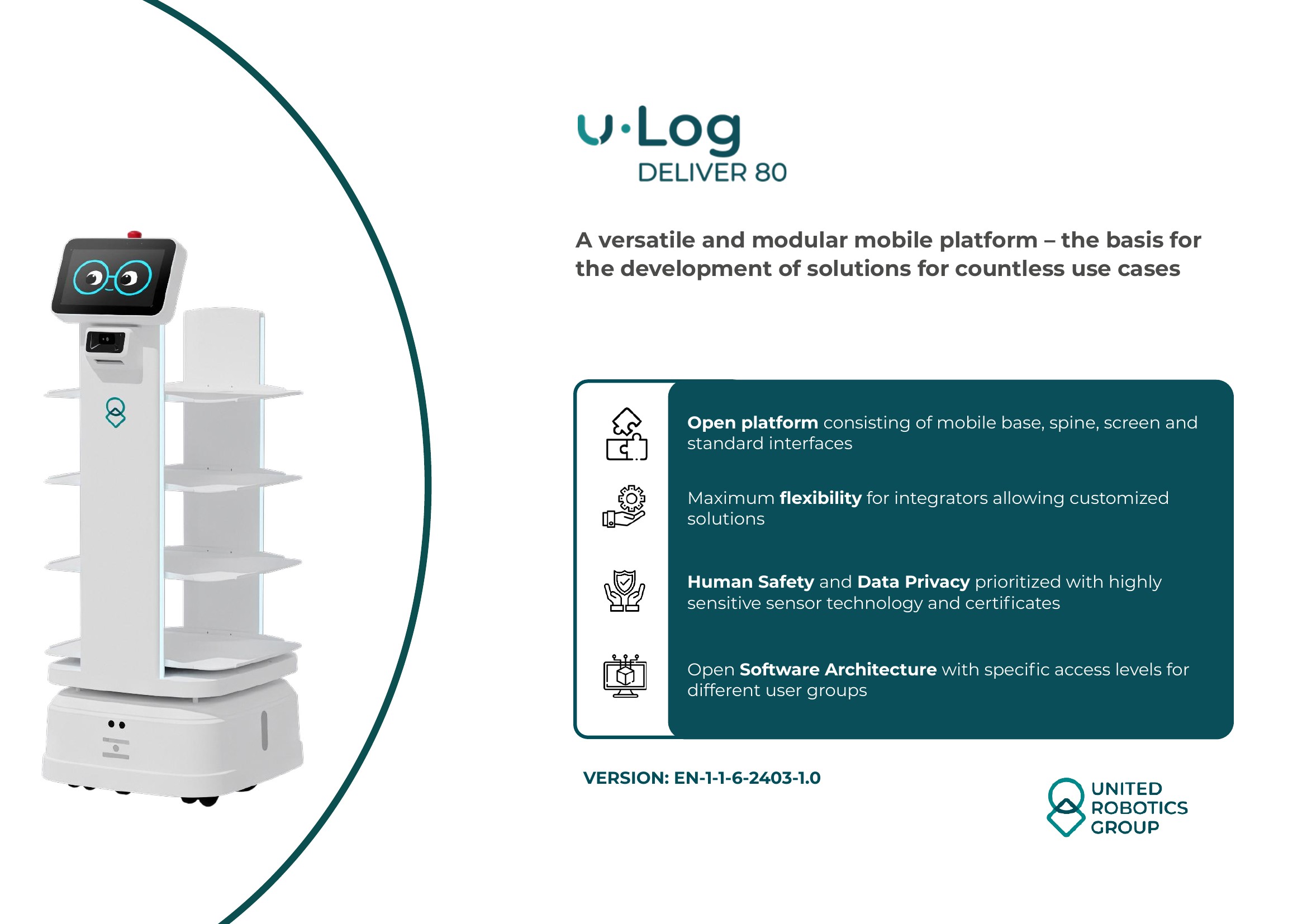
uLog robots can operate around the clock, delivering medications to residents' rooms, transporting meal trays from the kitchen, moving linens between floors, and ferrying supplies to nursing stations. They navigate elevators, memorize facility layouts, and avoid obstacles autonomously. A single robot can replace 1-2 FTEs in logistics workflows.
Engagement & Social Interaction
Loneliness and social isolation are pervasive issues in senior living, contributing to depression, cognitive decline, and higher mortality rates. Companion robots and humanoid robots can provide consistent, personalized interaction. These systems engage residents in games, reminiscence activities, memory exercises, and simple conversation.
Unlike human visitors who have limited availability, robots can provide on-demand engagement during off-hours—evenings, weekends, and nights when staffing is minimal. Residents report higher satisfaction and improved mood when they have regular robotic interaction.
Cleaning & Environmental Services
Autonomous cleaning robots maintain common areas throughout the facility during off-hours. Hallways, dining rooms, activity centers, and public spaces can be cleaned autonomously at night when residents are in their rooms, reducing daytime disruption and noise. This is particularly valuable for infection control and reducing the transmission of pathogens.
Medication Rounds & Logistics
Medication delivery is one of the highest-value automation opportunities in senior living. Manual medication rounds are labor-intensive, time-consuming, and error-prone. A nurse might spend 2-3 hours daily simply walking medications to residents' rooms.
Autonomous delivery robots streamline this process dramatically:
- Pre-loaded by pharmacy: The pharmacy loads a robot with an organized set of medications for specific residents. The robot delivers them to each room in sequence.
- Controlled access: Robots can store medications securely, with only authorized staff able to load and unload. Audit trails are automatically created for compliance.
- Real-time tracking: Every delivery is logged with timestamp, recipient confirmation, and photos. This creates a perfect compliance record for auditors and regulators.
- Reduced errors: By following a fixed route and delivery sequence, robots eliminate many human errors that occur during manual rounds.
- Staff redeployment: Nurses previously tied up in delivery can now spend time on assessments, direct care, and resident interaction.
Time Savings Example
A 150-bed facility with 3 nurses doing medication rounds saves approximately 6-8 hours of nursing time daily when using autonomous delivery robots. At an average nurse cost of $28/hour (loaded), that equals $170,000-$225,000 in annual labor savings.
Resident Engagement & Companionship
The social dimension of robotics in senior living often surprises observers. Research on robotic companions in long-term care shows meaningful improvements in resident wellbeing:
- Reduced depression and anxiety: Regular interaction with a companion robot correlates with lower depression scores and improved mood.
- Cognitive stimulation: Games, memory exercises, and conversation with interactive robots help maintain cognitive function.
- Increased activity: Residents engage more actively when robots initiate activities, reducing sedentary behavior.
- Nighttime support: Robots can provide comfort and distraction during difficult nights, reducing call-light usage and agitation.
- Family connection: Some platforms allow family members to interact with robots remotely, maintaining connection even when they cannot visit in person.
Humanoid robots like NAO have proven particularly effective in engaging residents with dementia. The robot's predictable, non-judgmental behavior appeals to residents who may be confused or anxious around human staff. Activities are personalized based on resident preferences and history.
Infection Control & Environmental Services
Senior living facilities are high-risk environments for infectious disease transmission. Residents often have compromised immune systems, and outbreaks can spread rapidly through a densely populated community. Environmental cleaning is critical to infection control.
Autonomous cleaning robots address this in multiple ways:
- 24/7 coverage: Robots can run continuous cleaning schedules, including overnight when human housekeeping staff isn't available.
- High-touch disinfection: Some robots can be configured to apply disinfectant to high-touch surfaces (railings, door handles, light switches).
- Consistent standards: Robots follow the same protocol every time, ensuring no areas are missed and consistent application of disinfectant.
- Reduced chemical exposure: Autonomous cleaning reduces the duration that humans are exposed to cleaning chemicals.
- Outbreak response: During outbreaks, robots can increase cleaning frequency on specific floors or units without exhausting staff resources.
The financial argument is compelling: a single outbreak in a 200-bed facility can cost $500,000+ in lost occupancy, staff overtime, and healthcare spending. Preventive measures that reduce outbreak frequency pay for themselves quickly.
Resident & Family Acceptance
The biggest misconception about robots in senior care is that residents will reject them. In practice, acceptance is high—often surprisingly so. Residents appreciate robots for practical reasons, and many develop genuine affection for interactive robots.
Resident Acceptance Factors
Acceptance is highest when robots provide clear value without requiring behavior change from residents:
- Delivery robots: Residents quickly embrace these as a convenience. The practical benefit is obvious and immediate.
- Familiar designs: Robots that are animal-like (resembling pets) or humanoid (familiar appearance) are more readily accepted than abstract designs.
- Transparency: When residents understand what the robot does and why, skepticism decreases.
- Personalization: Robots that remember residents by name and adapt to preferences create stronger acceptance.
Family Acceptance & Concerns
Families typically have more concerns than residents, particularly around:
- Job displacement: Many families worry that robots are replacing human caregivers. Clear communication that robots augment staff is essential.
- Safety: Families want assurance that robots won't cause falls or injuries. Demonstrations of safety features help.
- Privacy: Some families are concerned about robots in resident rooms. Addressing when and where robots operate is important.
- Dignity: Concerns about residents being served by machines rather than humans. Reframing as "giving humans time for human care" addresses this.
Acceptance Strategy
Successful facilities introduce robots gradually, starting with delivery and cleaning where value is obvious and adoption risk is low. Staff training is extensive—employees who understand and support robots become advocates with residents and families. Pilot programs with measured results build confidence for facility-wide rollout.
Unlock the rest of this guide
The remaining sections cover the ROI case, evaluation criteria, deployment planning, and the buyer’s checklist. Tell us where to send it and the full guide unlocks instantly.
We respect your inbox — no spam, just the guide and the occasional URG insight.