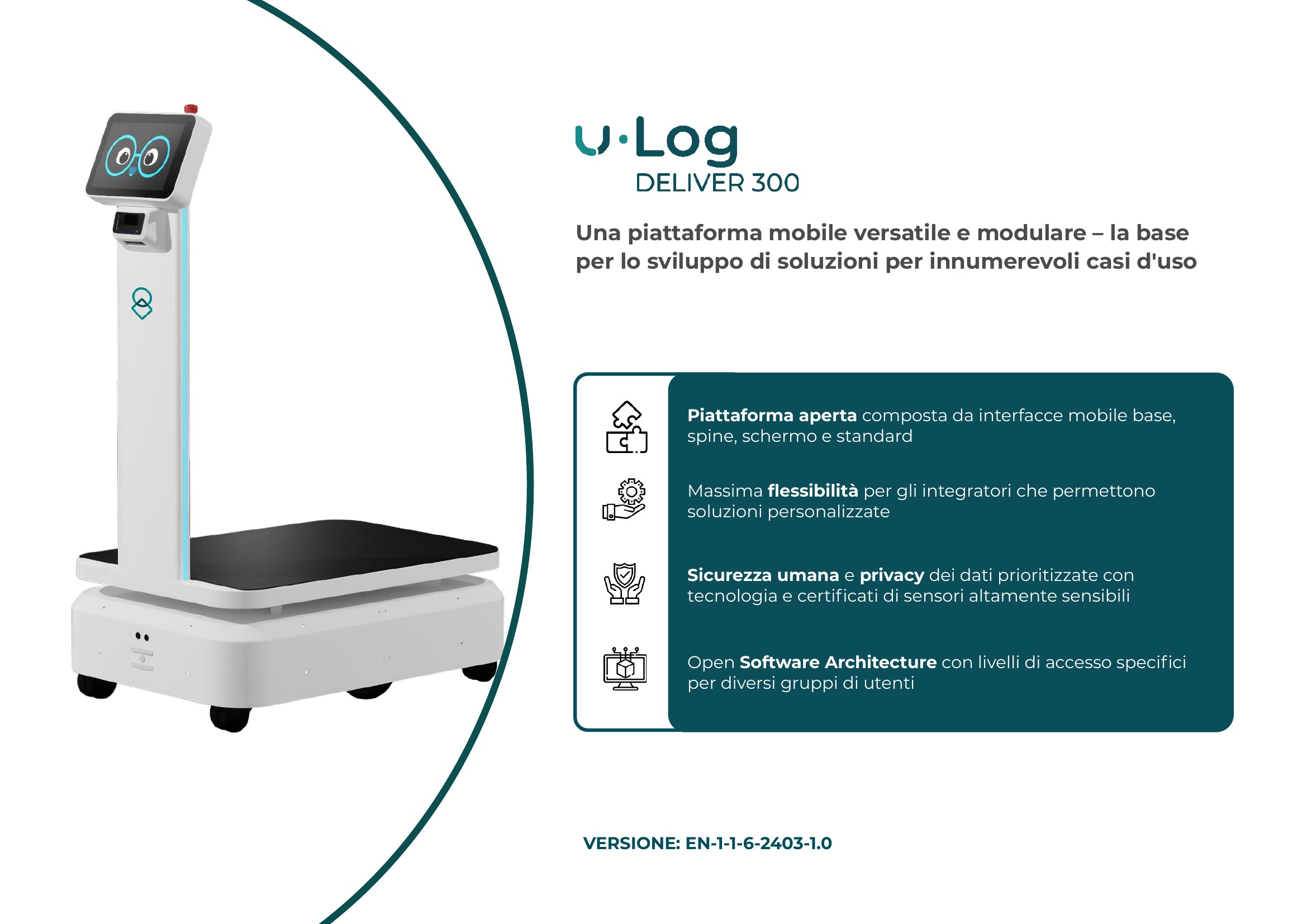
Understanding Payload: Weight vs. Volume
When selecting a delivery robot, payload capacity is the critical spec—but it's more complex than just "how heavy can it carry?" Two factors matter: weight capacity (pounds/kilograms) and volume/space capacity (cubic feet or cubic meters). A robot might have adequate weight rating but insufficient space for large, light items. Conversely, a compact robot might handle weight but lack the footprint for volume-heavy deliveries.
Example: A pharmacy order of 50 small pill bottles weighs 10 lbs but needs minimal space. The same robot carrying a linen bundle might weigh 40 lbs but occupy significant volume. Matching the right robot to your typical delivery profile is essential for efficient operations.
Critical Point: Know Your Mix
Before selecting robots, audit your actual deliveries for 2 weeks. Categorize by weight and volume. You'll discover patterns: 60% of pharmacy orders are small (under 20 lbs, minimal volume), 30% are medium (20-50 lbs), and 10% are large (heavy or bulky). Use this data to right-size your fleet.
Delivery Robot Payload Categories
| Category | Payload Capacity | Typical Volume | Best For |
|---|---|---|---|
| Small (uLog 80) | 80 lbs / 36 kg | ~15 cubic feet | Pharmacy, lab samples, small supplies, room service |
| Medium (uLog 150) | 150 lbs / 68 kg | ~25 cubic feet | Standard meals, moderate supplies, document/record transport |
| Large (uLog 300) | 300 lbs / 136 kg | ~40 cubic feet | High-volume meals, linen, heavy supplies, equipment transport |
| Extra-Large (uLog 300XL) | 300 lbs / 136 kg | ~50 cubic feet | Oversized carts, bulk linen, large equipment, special requests |
Common Hospital Delivery Use Cases
Pharmacy Deliveries
Typical load: 5-25 lbs (2-11 kg); small footprint
Best robot: uLog 80 (adequate weight and space)
Frequency: Multiple deliveries daily (6-12 runs); rapid turnaround needed
Special requirement: Temperature sensitivity; some medications need climate control. Verify robot can transport refrigerated items if required.
Lab Sample Transport
Typical load: 2-15 lbs; highly sensitive items requiring careful handling
Best robot: uLog 80 with specialized carriers for fragile samples
Frequency: Continuous throughout day; stat labs require rapid delivery
Special requirement: Smooth acceleration/deceleration to minimize vibration; biohazard-safe containers
Meal Delivery
Typical load (single patient): 5-10 lbs per tray; multiple trays = 15-50 lbs
Best robot: uLog 150 (handles 5-8 meal trays per run)
Frequency: 3 peak periods daily (breakfast 7 AM, lunch 12 PM, dinner 6 PM); high volume
Special requirement: Temperature maintenance (hot/cold); tray security to prevent spilling
Linen & Laundry
Typical load: 40-80 lbs per cart; bulky but moderate weight
Best robot: uLog 150 or 300 (depending on cart design)
Frequency: 2-4 times daily (morning changeover, midday pickup, evening restocking)
Special requirement: Odor containment; secure cart attachment to prevent shifting
Medical Supplies & Equipment
Typical load: Highly variable; 10 lbs (IV poles) to 200+ lbs (patient lifts)
Best robot: Multi-robot approach: uLog 150 for routine supplies, uLog 300/300XL for heavy equipment
Frequency: Episodic (on-demand when units need supplies)
Special requirement: Secure fastening; ability to handle irregular shapes
Matching Payloads to Missions
The key is to avoid oversizing robots. A uLog 300 can carry 300 lbs, but if you're delivering 20-lb pharmacy orders, you're wasting capacity. Conversely, undersizing forces multiple trips for large deliveries, reducing efficiency. Here's how to match correctly:
Single-Purpose Fleet (Smaller Facilities)
If your facility delivers primarily one type of load (e.g., meals), select a robot sized for your typical load plus 20% buffer:
- Meal-heavy facility: Average load 25 lbs → Select uLog 150 (40-60 lbs actual utilization of 150-lb capacity)
- Pharmacy-heavy facility: Average load 15 lbs → Select uLog 80 (high utilization, cost-effective)
- Linen-heavy facility: Average load 80 lbs → Select uLog 300 (strong utilization)
Multi-Purpose Fleet (Larger Hospitals)
If your facility has diverse deliveries, deploy a mixed fleet:
- 2x uLog 80 for pharmacy and lab (high-frequency, low-weight missions)
- 3x uLog 150 for meals and routine supplies
- 1x uLog 300 for linen and heavy equipment
This approach optimizes utilization: light, frequent deliveries use small robots (low cost, fast turnaround); heavy, episodic deliveries use large robots (cost spread across fewer trips).
Weight & Volume Trade-Offs
Some deliveries are weight-constrained (heavy items, limited volume): linen carts, equipment. Others are volume-constrained (large but light): stack of clean linens, bulky packaging. Understanding this distinction prevents mismatches.
Weight-Constrained Examples
- Linen cart: 80 lbs, moderate volume. Needs adequate weight capacity but not maximum volume.
- Patient lift/walker: 60-100 lbs, compact footprint. Weight matters more than volume.
Robot selection: Focus on weight rating. uLog 150 or 300 depending on frequency.
Volume-Constrained Examples
- Meal trays for 6 patients: ~30 lbs but stack 18-24 inches high, ~3 feet wide. Takes significant volume despite moderate weight.
- Clean linens: 40 lbs but occupy 2 cubic feet when compressed. Light and compact despite space.
Robot selection: Focus on footprint and height. A robot with wide platform and tall boundaries accommodates stacked meals better than a narrow robot, even if weight capacity is identical.
Fleet Mix Strategies
Conservative Sizing
Size each robot for your typical load, not your peak load. Use multiple smaller robots rather than one large robot. Benefits:
- Lower cost per unit
- Redundancy: if one fails, others still operate
- Parallel deliveries: multiple robots reduce delivery time
- Peak flexibility: add robots for high-demand periods
Aggressive Sizing
Deploy fewer, larger robots with higher capacity. Benefits:
- Handles any load type (weight or volume)
- Fewer robots to manage and maintain
- Lower shipping/installation complexity
Trade-off: Higher upfront cost; lower utilization on small deliveries; fewer parallel operations.
Hybrid Approach (Recommended)
Combine small and medium robots for most hospitals. Large robots handle occasional oversized deliveries.
- 2x uLog 80 (pharmacy/lab): $140K total; handle 60% of volume in lightweight deliveries
- 3x uLog 150 (meals/supplies): $210K total; handle 35% of volume in standard deliveries
- 1x uLog 300 (linen/equipment): $90K total; handle 5% of volume in heavy deliveries
Total fleet cost: ~$440K for a mid-sized hospital (300-400 beds). Alternative: 3x uLog 300 = $270K but requires oversizing, lower utilization, longer delivery times (fewer parallel routes).
Real-World Sizing Examples
Community Hospital (100-150 beds)
Daily deliveries (estimated): 40 pharmacy, 15 meal sets, 5 linen/supply runs
Recommended fleet: 1x uLog 80, 2x uLog 150
Investment: $175K
Utilization: All three robots active during peak hours (11 AM-2 PM lunch delivery); 1-2 robots during off-peak
Large Hospital (400+ beds)
Daily deliveries: 120 pharmacy, 60 meal sets, 20 linen/supply runs, plus ad-hoc equipment
Recommended fleet: 3x uLog 80, 4x uLog 150, 1x uLog 300
Investment: $710K
Utilization: Peak: 5-6 robots active simultaneously; Off-peak: 2-3 robots. One robot reserved for maintenance/emergency.
University Medical Center (250 beds + research)
Unique factors: Lab sample priority, research equipment transport, teaching hospital (complex routing)
Recommended fleet: 2x uLog 80 (lab priority), 2x uLog 150, 1x uLog 300
Special consideration: Lab samples often require stat delivery (immediate); dedicated uLog 80 robots ensure low latency
Investment: $490K
Future-Proofing Your Robot Selection
When choosing robots, consider growth and operational changes:
Growth Planning
If your facility plans expansion (new floors, wing additions), factor growth into robot selection. It's cheaper to add robots to an existing infrastructure than to retrofit new systems later. Start with modular, expandable systems.
Mission Evolution
Hospital operations change. If you deploy robots for pharmacy deliveries today, you might add meal delivery in 6 months. Select robots flexible enough to handle evolving missions. Medium-capacity robots (uLog 150) are more versatile than single-purpose extremes.
Technology Upgrades
Ensure manufacturers support firmware updates, route optimization improvements, and integration with new hospital systems (electronic health records, pharmacy ordering systems). Avoid robot platforms with dead-end development.
Need Help Sizing Your Robot Fleet?
URG Americas provides comprehensive delivery assessments to determine optimal robot selection for your facility. We audit your current deliveries, project growth, and recommend right-sized fleet strategies tailored to your specific operations.
Request a Fleet AssessmentConclusion
Choosing the right delivery robot requires understanding both weight and volume constraints of your typical deliveries. Don't overpay for excess capacity, but ensure you have adequate capability for your peak scenarios. Audit your actual delivery patterns, then size your fleet accordingly. A hybrid approach combining small, medium, and occasional large robots balances cost, utilization, and flexibility. With careful planning, your robot fleet will operate efficiently for years while accommodating future growth.