The Metric That Matters: Time Returned to Care
Hospitals are not automating logistics to replace people. They are doing it to keep scarce clinical staff at the bedside. So the metric that matters is not units deployed or trips completed, it is the clinical time returned to the people trained to deliver care.
Framing the project this way changes the conversation with clinical leaders. It is not about robots, it is about giving a short-staffed floor more of its shift back for the work only people can do.
Quantifying Non-Clinical Movement
Start by naming the trips. Nurses and aides move specimens, medications, linens, supplies, meals, and waste across units and floors all day. Each of those is a category of movement that pulls a trained person away from patients.
Walk a typical shift and count the trips, the distance, and the time. Even a rough tally usually reveals that a meaningful share of the day goes to corridor travel, which is the least clinical part of the job and the easiest to hand to a robot.
How to Measure Before and After
A credible result needs a baseline. Before deployment, measure how much time staff spend on the target trips on a representative unit. Keep it simple and repeatable so you can compare the same measure afterward.
After the robot is running the route, measure again. The difference is your time returned. Because an autonomous unit logs each handoff, you also get a reliable record of what it carried and when, which strengthens the before-and-after story.
Building the ROI Case
Translate the time returned into terms your finance team recognizes. Clinical hours redirected from corridors to care have real value, and reducing the non-clinical burden also supports retention on units where burnout is a genuine cost.
The strongest cases are specific and modest. Prove the savings on one route on one unit, document it, and use that result to justify the next step rather than promising a facility-wide transformation up front.
Deployment Without Disrupting Care
A hospital is a live 24/7 environment, so deployment has to be careful. Map the route, define handoff points, and plan for elevators, doors, and busy periods so the robot fits the workflow instead of interrupting it.
Bring the clinical team in early. When staff understand that the robot takes the corridor trips off their plate, adoption follows quickly, because it solves a problem they feel every shift.
Scaling From One Route to a Fleet
Once one route is proven, scaling is a matter of repeating what worked. Add routes and units where the measured time returned justifies it, rather than deploying broadly and hoping.
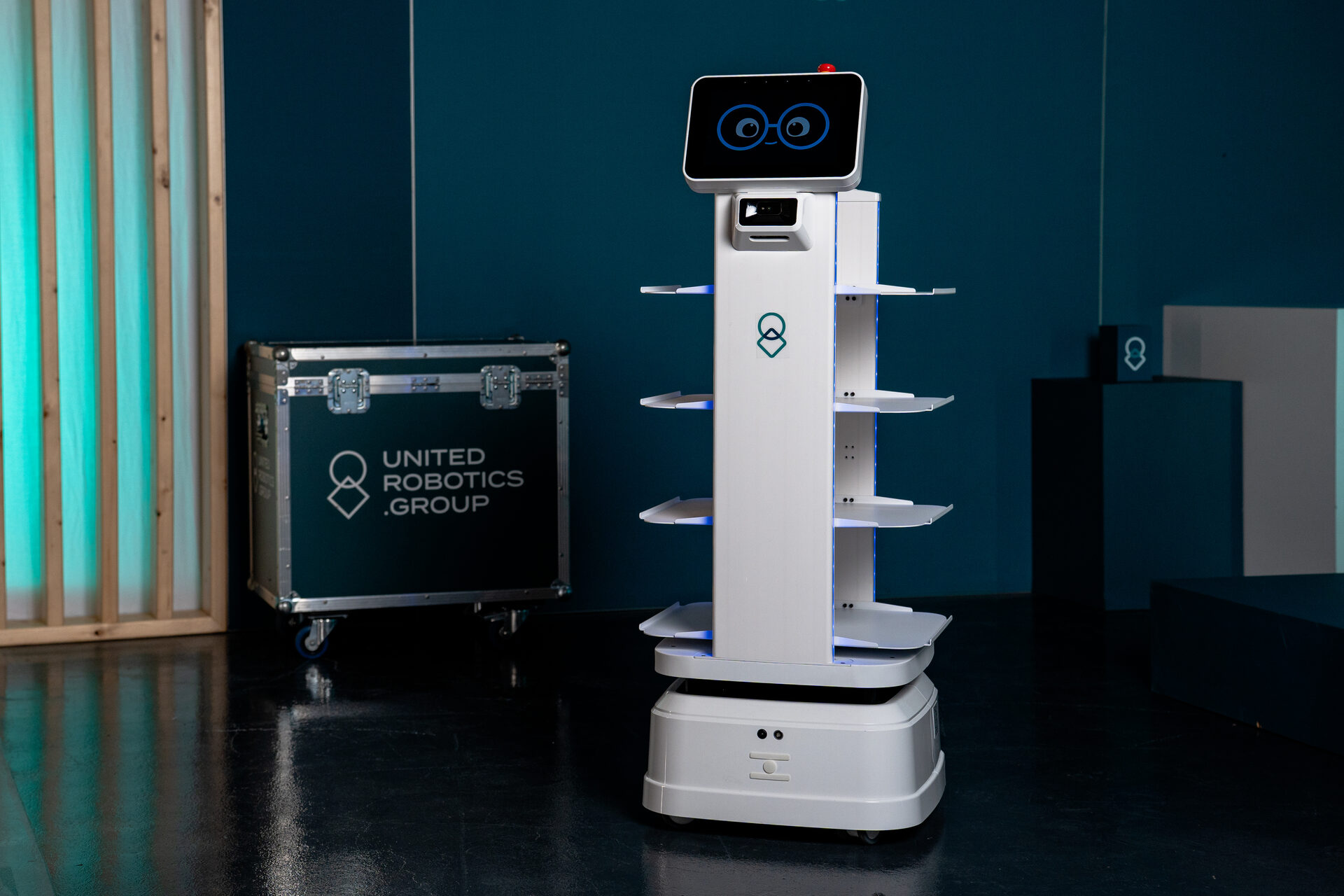
uLog is built to carry this workload, moving materials autonomously between departments and floors with a time-stamped record of every handoff. On our Robots-as-a-Service model a health system can prove the savings on one route at a fixed monthly cost before scaling to a fleet.