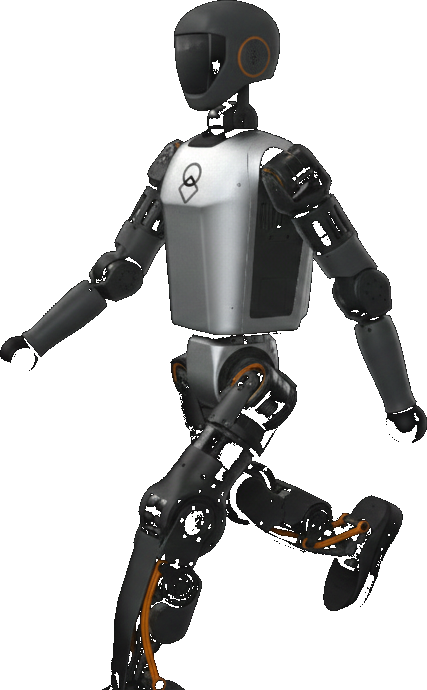
Definitions & Key Distinctions
The terms "autonomous robots" and "collaborative robots" (cobots) are sometimes confused, but they represent fundamentally different approaches to automation.
Autonomous Robots
Fully autonomous robots operate without human supervision or control. They make decisions independently about what to do, when to do it, and how to respond to their environment. Examples: delivery robots, autonomous cleaning robots, autonomous forklifts.
- Decision-making: Built-in AI decides actions (where to go, what to pick up, how to navigate obstacles)
- Supervision: Minimal; humans monitor remotely or sporadically
- Workspace: Can operate in environments with humans (but requires safety systems)
- Workflow: Follows a defined process or goal (deliver to Room 5, clean Floor 2)
Collaborative Robots (Cobots)
Cobots are designed to work alongside humans, taking direction and adapting to human presence. They typically perform specific, well-defined tasks in shared workspaces.
- Decision-making: Humans direct tasks; robot handles the physical execution (pick, place, assemble)
- Supervision: Constant; human operator is always present and guiding the task
- Workspace: Explicitly designed for shared space with humans (force-limited, safe to touch)
- Workflow: Takes instructions (pick this part, place here, repeat)
When Full Autonomy Matters
Choose fully autonomous robots when:
- 24/7 operation is required: Tasks must happen continuously (delivery, cleaning, monitoring). Humans can't work night shifts.
- Labor is unavailable: Staffing shortages make hiring difficult. Autonomous robots fill the gap.
- Tasks are dangerous or unpleasant: Delivery through contaminated areas, cleaning hazardous chemicals, monotonous repetitive work.
- Consistency is critical: Same quality, same timing every cycle. Humans vary; robots are consistent.
- The task is well-defined: Process is clear and doesn't change often (deliver medications, clean hallways, transport goods).
- Large-scale is needed: One robot can serve many workers or areas. A cobot can assist only the operator using it.
Examples: delivery robots in hospitals, autonomous cleaning in office buildings, logistics robots in warehouses, autonomous floor care in schools.
When Human-Robot Collaboration Wins
Choose cobots when:
- Tasks require judgment or adaptation: The work varies by task (assembly varies by product, picking varies by order). Humans can adapt; robots cannot without reprogramming.
- Dexterity and precision are crucial: Placing small parts, assembling components, delicate handling. Humans have superior fine motor control.
- The process changes frequently: Product changes, customer specifications vary, new SKUs constantly introduced. Retraining a cobot is fast; deploying a new autonomous robot takes months.
- Safety concerns are manageable: The shared workspace doesn't have inherent hazards. Force-limiting and safety monitoring suffice.
- The human operator provides value: Their judgment, experience, and decision-making are essential to quality or safety.
- Cost is tightly constrained: Cobots can be leased, configured, and deployed quickly. Autonomous robots require significant upfront investment and customization.
Examples: assembly line cobots, pick-and-place in production, packaging, inspection assistance, quality checking.
Industry-by-Industry Comparison
| Industry | Autonomous Robot Fit | Cobot Fit | Recommendation |
|---|---|---|---|
| Healthcare | HIGH (delivery, cleaning, monitoring) | MEDIUM (assisting with procedures, patient handling) | Autonomous for logistics; cobots for patient care |
| Manufacturing | MEDIUM (material handling, logistics) | HIGH (assembly, welding, machine tending) | Cobots excel at assembly; autonomous for warehouse |
| Retail/Hospitality | HIGH (delivery, cleaning, customer service) | LOW (most tasks require human judgment) | Autonomous robots for back-of-house operations |
| Logistics/Warehouse | HIGH (picking, sorting, transport) | MEDIUM (item packing, loading) | Autonomous for item movement; cobots for packing |
| Education | HIGH (humanoid robots for teaching) | HIGH (collaborative learning activities) | Both useful; depends on learning goals |
Cost Differences & Total Cost of Ownership
Comparing true costs requires looking beyond purchase price:
Initial Investment
- Cobot: $35,000 - $150,000 (robot only, no peripherals)
- Autonomous robot: $100,000 - $500,000 (robot + required infrastructure, sensors, integration)
Installation & Integration
- Cobot: 2-6 weeks; mounting, programming, training
- Autonomous robot: 8-16 weeks; site mapping, network setup, safety system validation, staff training
Operating Costs (Annual)
- Cobot: Minimal; operator salary (that person was already there), maintenance ($2,000-$5,000/year)
- Autonomous robot: Remote monitoring ($0-$5,000/year), maintenance ($5,000-$10,000/year), downtime risk is higher
Total Cost of Ownership (5 years)
- Cobot assisting one worker: $50,000 - $200,000 total (focused on operator wages)
- Autonomous robot serving multiple areas: $150,000 - $750,000 total (but serves many more people)
Cost per unit of output matters most. A $200,000 autonomous robot serving 500 beds costs $400 per bed. A $50,000 cobot for one assembly line might cost $1,000 per unit produced. Context determines which is more cost-effective.
Deployment Complexity & Infrastructure
Cobot Deployment
Relatively straightforward:
- Choose mounting location (floor, table, wall)
- Configure end-of-arm tooling (gripper, vacuum, magnet)
- Program task sequence (typically graphical, non-coding)
- Train operator (usually 1-2 days)
- Deploy and iterate based on results
Autonomous Robot Deployment
More complex, requires more preparation:
- Facility assessment (floor conditions, layout, infrastructure)
- Mapping and localization (teach robot the space)
- Safety system design (zones, speed limits, integration with existing safety systems)
- Network planning (reliable WiFi or direct connection)
- Integration with facility systems (doors, elevators, access control, potentially fleet management)
- Staff training across multiple departments (security, operations, end-users)
The autonomous robot requires more upfront work but delivers broader value across the organization.
The Future: Convergence Trends
The boundary between autonomous robots and cobots is blurring:
- Smarter cobots: Advanced cobots now have machine vision and simple decision-making, enabling them to work with less human guidance.
- More supervised autonomy: Autonomous robots increasingly request human input on ambiguous decisions rather than failing or acting unsafely.
- Hybrid systems: Facilities deploy both—autonomous robots handle routine tasks, while cobots assist with complex or variable work.
- Cloud-enabled robots: Both types increasingly offload decision-making to cloud AI, improving capabilities without onboard complexity.
The Real Future
Most facilities will use both. Autonomous robots handle the bulk of routine, predictable work (delivering items, cleaning, transporting materials). Cobots assist workers with complex tasks that require judgment or dexterity. They don't compete—they complement each other, creating a more efficient operation than either could achieve alone.
Decision Framework for Your Facility
Ask yourself these questions to determine which makes sense:
1. What problem are you solving?
- Staffing shortage → Autonomous robots
- Repetitive work overload → Cobots to assist
- Quality inconsistency → Autonomous robots (consistency)
- Expensive errors → Cobots (human oversight)
2. How variable is the task?
- Highly routine, same every time → Autonomous robots
- Changes often, requires adaptation → Cobots
3. What's your capital budget and payback requirement?
- High budget, willing to wait 3+ years → Autonomous robots
- Limited budget, need quick payback → Cobots
4. Is continuous operation needed?
- Yes, 24/7 operation required → Autonomous robots
- No, during business hours okay → Cobots
5. How important is human judgment in this task?
- Low; process is well-defined → Autonomous robots
- High; judgment matters to quality or safety → Cobots
Most facilities benefit from evaluating both options and potentially deploying both technologies in complementary roles. The future of operations is human-robot collaboration at scale—not robots replacing humans, but humans and robots each doing what they do best.