The Dining Room Staffing Squeeze
Senior living operators continue to report severe difficulty filling caregiving and dining roles even as demand grows with an aging population. The dining room, which is central to residents' days, is often where short staffing is felt most acutely.
When the dining team is stretched, service slows and caregivers spend the meal rushing trays instead of connecting with residents. That is the exact problem autonomous dining support is meant to relieve.
Where a Dining Aide's Time Goes
A dining aide can walk miles in a single shift, most of it carrying meals out and bringing bus tubs back between the kitchen and the tables. That repetitive legwork is physically demanding and is a major driver of the turnover operators keep citing.
The irony is that the walking is the least personal part of the job. The time spent hauling trays is time taken away from the resident interaction that is the whole point of the dining experience.
How Service Robots Support Dining
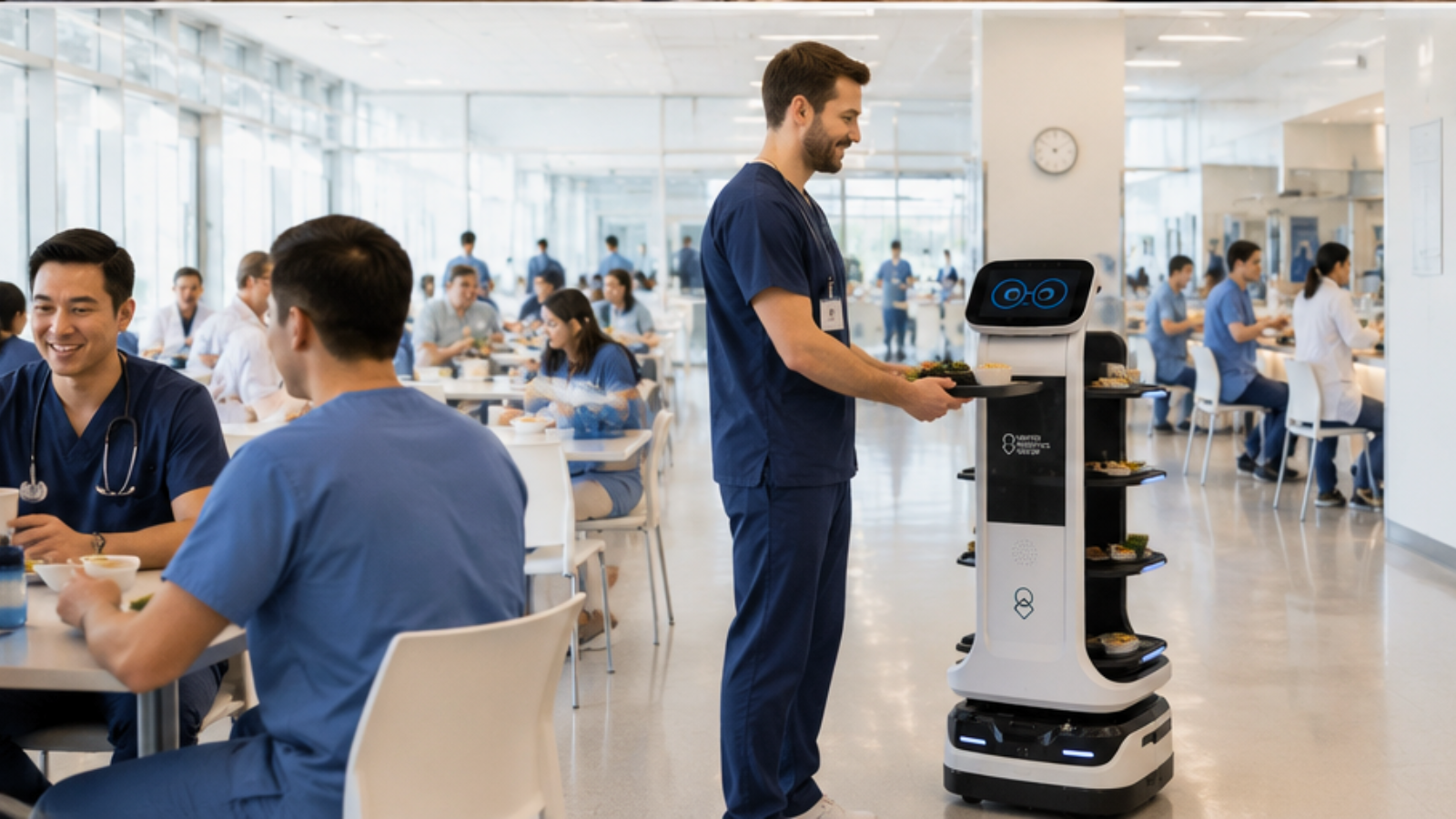
An autonomous service robot runs food out and carries bus tubs back on its own, weaving safely through a busy dining room between the kitchen and the floor. It handles the repetitive laps so the team can stay with residents.
This is support, not replacement. In a sector that already cannot hire enough people, the robot removes the repetitive trips so the humans do the human work of caring for and connecting with residents.
Protecting the Human Touch
The concern operators raise first is whether a robot makes dining feel less personal. The answer, when it is deployed well, is the opposite. By taking the laps off the team, the robot gives staff more time for the personal attention that defines good care.
The robot does the carrying, the people do the caring. Framed and rolled out that way, service robots protect the human touch rather than diminish it.
Resident and Staff Adoption
Adoption goes smoothly when staff understand the robot is there to take work off their plate, not to watch over them. Residents generally warm to it quickly, especially when the team introduces it as a helper for the dining room.
A short introduction period, clear roles, and staff input on how the robot is used go a long way. The goal is for the team to feel the relief in the first busy meal service.
Starting With One Dining Room
You do not need to transform the whole community at once. The lowest-risk path is to prove it in a single dining room, measure the relief for the team and the effect on service, and expand from there.
uServe is designed for exactly this dining workflow. On our Robots-as-a-Service model an operator can put one unit to work in one dining room at a fixed monthly cost and measure what it gives back before scaling.